
Building Relationships that Last
Being a Stable and Practical Partner


Love in literature is not realistic. In Gabriel García Márquez’s Love in the Time of Cholera, Florentino dedicates his life to waiting for Fermina. Outside books, this is not romantic — it is a wasted existence. Lasting relationships are not built on over-the-top gestures or heightened emotion, but by stable and practical partners.
Relationships flourish and endure when grounded in truth, communication, loyalty, individuality, and improvement. There is a reason why truth is first in this list.
Truth leads to better outcomes because it more accurately reflects reality. Even protective lies rob people of this.
Telling the truth can be difficult when it disrupts the norm, but lying is a bad alternative — it undermines trust and breeds resentment. Hearing that reality is different than expected is challenging; hearing what is untrue is harmful.
Say what is correct. Tackle difficult conversations early — and together — to prevent catastrophe down the line. Truth naturally connects to communication: honesty must be expressed clearly and punctually to strengthen a relationship.
Communication — verbal and nonverbal — is essential for building stable relationships. Through words and actions, we convey goals and dreams, as well as dislikes. More practically, we can talk about what is bothering us.
Feeling comfortable enough to highlight problems in relationships allows for adjustment before lasting damage occurs. It is your refrigerator telling you the temperature is too high and if you do nothing, all the food will spoil.
Communication and disagreement are related concepts. They are both vital in relationships. Disagreements are inevitable when spending an extended period with someone. Do not be scared of them. They are an opportunity to demonstrate you are listening to the other person respectfully — without judgement.
Any type of communication — even disagreement — strengthens emotional bonds in relationships. It is sulking and silence — a breakdown of communication — that spawns ambiguity and distrust.
We should be like Amazon parrots, who communicate vocally and through body language to form strong pair bonds.

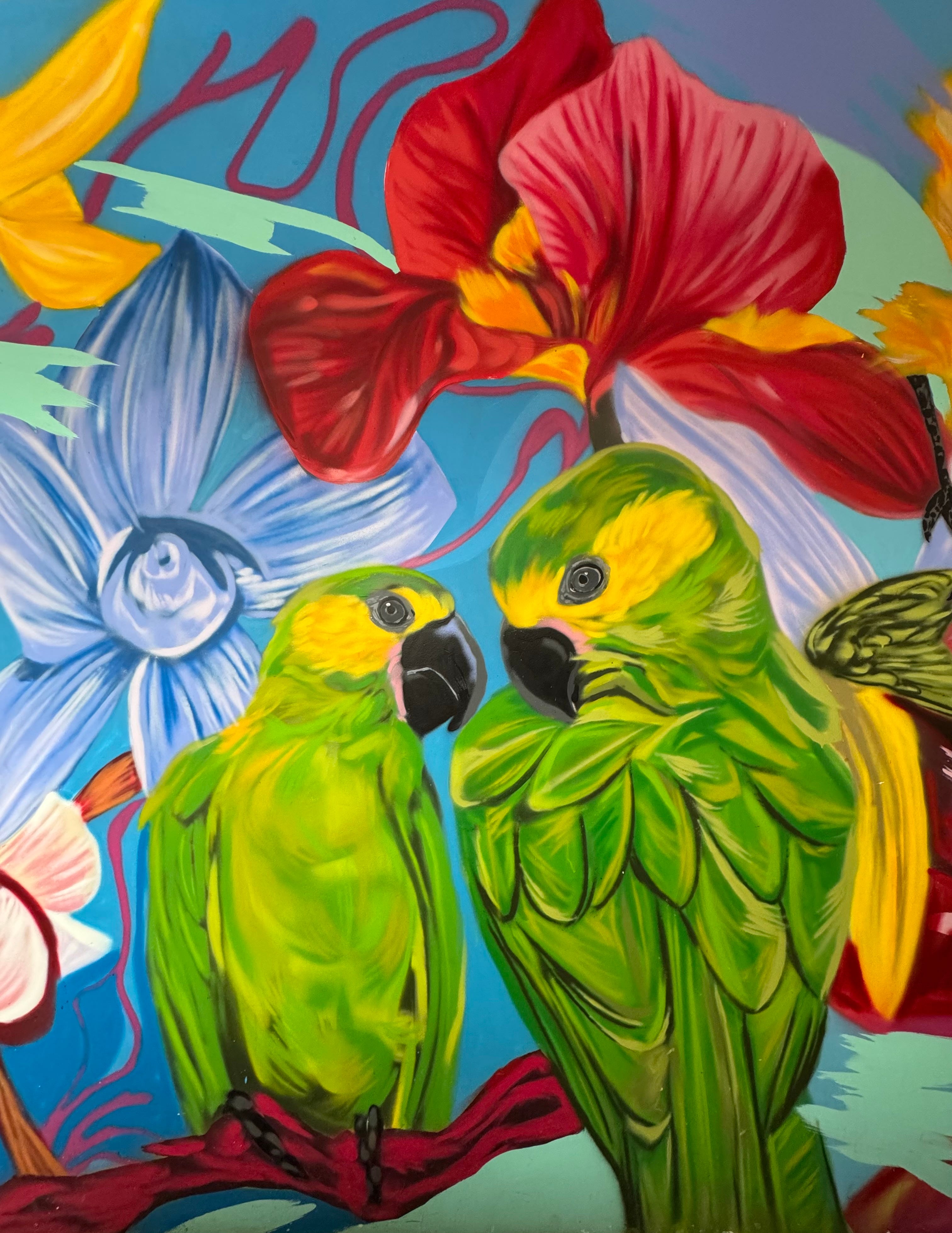
Not following the parrot’s example and choosing not to communicate — for whatever reason — signals more profound problems: declining intimacy, conflict avoidance, or loss of trust. These are relationship killers, especially any cessation of trust or loyalty. Without trust, words lose their meanings. Which is why loyalty is a pillar.
Loyalty means being faithful, respectful, and present when it matters most. Protecting the sacred bond of a relationship is clear loyalty. For example discussing disagreements with each other, not outsiders.
Expecting loyalty and being loyal are different. The former is to be vulnerable. You must trust another person to do the right thing when you are not watching. Mistrust destroys everything in front of it, a relationship cannot survive it.
I have learned from experience that trusting fully is less exhausting than constant suspicion. However, making oneself so exposed is easier said than done, especially if one has past traumas.
Unpleasant past experiences, like infidelities, can cause jealousy. This stems from insecurities, resentment, and distorted reality — these are not congruent with long term fulfillment. It is not a moral failing to be jealous, but it will destroy a relationship, because it is unattractive.
It is not a death sentence. Admitting is the first step. Then positive action can follow to combat jealousy: learning your worth, accepting constructive feedback, and building confidence.
Being betrayed is painful, but survivable — do not let what happened before destroy what you are building now. If you trusted someone and they let you down, you have learned an important, though agonising, lesson about them — not your current partner.
We cannot judge people based on the actions of those that came before them, because each person is an individual with their own story. The connection between loyalty and individuality is iron clad: trusting someone new is to recognise they are unique — not the same as what happened before.
Individuality nurtures health and balanced relationships. We fall in love with an individual and what makes them unique. We must never try to change them, depend on them for all our emotional needs, or become a single entity.
Two people can be a team without losing their identities. We must always say “I love myself, and I love you” — both must continue being true for a relationship to flourish.
Conversely, toxic relationships are those where one — or both — are dependent on the other for everything. This is an unfair burden to place on someone and they will start to resent you for it.
It is understandable that spending so much time with someone could force us to slowly drift towards this state of dependence, but we must take action to prevent it. Support your partner’s dreams while pursuing your own is a good example of encouraging individuality.
The thing about individuals with hobbies, interests, and points of view is that they are fascinating. When something is fascinating, it stimulates us to keep evolving. Individuality naturally leads to improvement.
Improvement of self and relationship is inspiring. We are attracted to people who want themselves and our relationships to be better. This does not have to be purely physical. It can be learning and experiencing new things — either as an individual or together.
Physical attraction matters, but it cannot sustain a relationship. Appearance fades, while personality endures. For a long and stable relationship, fall in love with what stands the test of time: morals and character.
However, in the spirit of improvement, it is fine to want to look better for yourself and for your partner. While the results of sessions in the gym will be appreciated, the effort to improve oneself and keep demonstrating to your partner “I want to look good for you” will be appreciated far more.
To love is a verb — an action that one must do. People don’t fall out of love; they choose to stop putting in effort. The truth is we must show up for our partners every day and keep watering the flowers of our relationship; keep giving them sunlight in the form of effort, patience, and communication.
Entropy applies to relationships, as in physics. If we cease to work on our relationships — if we cease to give them our energy — they will get worse. Just as the plant withers and dies when it stops photosynthesising, a relationship wilts without action and effort.

Transformational relationships are those in which both partners give a part of themselves to build a future and support each other’s progress. This is not saying what your partner wants to hear; it is saying what they have to hear: celebrate victories, encourage risk-taking and most importantly offer criticism if it is justified. Each of these actions demonstrate an investment in the relationship.
Some people are flexible on certain matters, whilst others aren’t: family, career, finances. Yet no one is indifferent about striving for a life filled with love and experiences, if they are serious about being a stable and practical partner.
A relationship is a hopeful exploration — a shot in the dark even — that two people in a world of eight billion can be the best version of themselves together. Robust, enduring relationships are built on the pillars of truth, communication, individuality, loyalty, and improvement.
This is a great piece. Hits a lot of big topics honestly but I think my favorite here is the idea of building together- Constructive criticism. Well done!